
Telepathology in Tanzania: Expanding Access to Expert Cancer Diagnosis
By - June 16, 2026
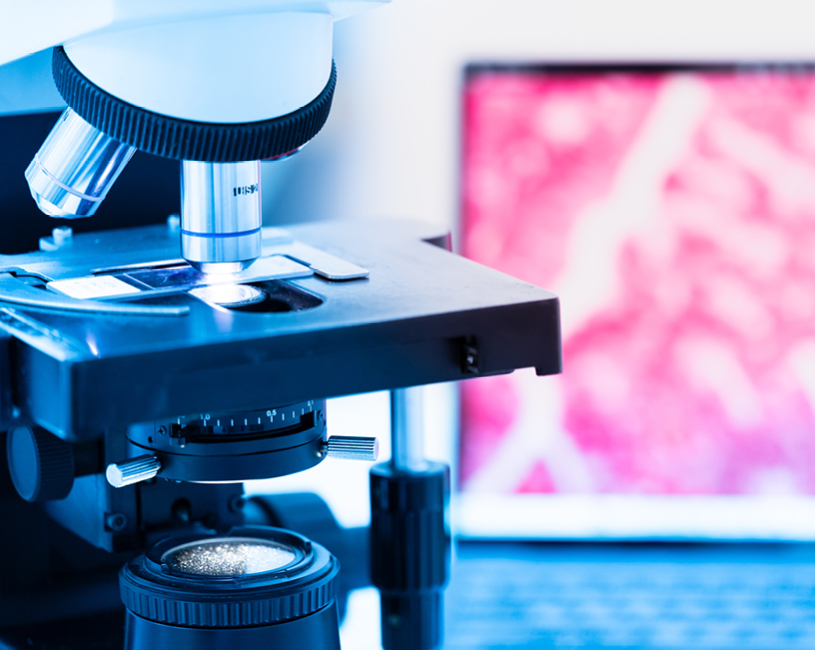
For years, the pathology department at Kilimanjaro Christian Medical Centre (KCMC) in Tanzania has been understaffed, making it difficult to get specialists to weigh in on certain kinds of cancer diagnoses.
That began to change in 2018, when a collaboration between the American Society for Clinical Pathology (ASCP), Duke University, and KCMC launched a telepathology consultation platform using whole slide imaging (WSI). This allowed pathologists in Tanzania to digitize slides and securely share them with subspecialty experts in the United States and the Netherlands for remote review.
A recently published study in the American Journal of Clinical Pathology (AJCP) led by ASCP Global Health Fellow, Aisha Mohamed, MD, a third-year pathology resident at the University of Minnesota Department of Lab Medicine and Pathology, found that telepathology improved access to expert consultation, supported education and mentorship, and in many cases changed diagnoses in ways that directly affected patient care.
Dr. Mohamed says, “This paper also provides a template for other similarly resourced pathology departments to follow. It provides a cost breakdown of the implementation of telepathology at KCMC.”
Building a pathology service with limited resources
Before telepathology, between 2006 and 2015, KCMC’s pathology department did not have a full-time local pathologist. The time between visiting pathologist consultations could range from weeks to months, according to Alex Mremi, MD, PhD, Head of Pathology at KCMC. The staff pathologists also had limited access to immunohistochemistry and subspecialty expertise. “It was challenging and therefore telepathology is very important,” Dr. Mremi says.
While telepathology has been essential in giving “generalists access to subspecialty expertise that otherwise would not have been available,” Dr. Mremi stresses that “telepathology did not replace local pathologists at KCMC.” It enhanced their work.
How whole-slide imaging makes remote consultation possible
Whole slide imaging expands access by scanning traditional glass slides into high-resolution digital images that can be reviewed remotely. At KCMC, laboratory staff use a Motic whole slide imaging system and upload files to a secure cloud-based platform, which can then be shared with consultants abroad. The AJCP study found that 92 percent of the digital images were considered “diagnostically adequate.”
The WSI and telepathology enables KCMC pathologists to consult pathologists in subspecialties, which Dr. Mremi calls a form of “external quality control but also teaching and networking.”
Dr. Mohamed adds that “Telepathology offers an avenue for pathologists in high-resourced settings to give back by providing mentorship to junior pathologists abroad and their expertise on challenging cases, without having to cross an ocean.”
Measuring diagnostic agreement across subspecialties
The AJCP study analyzed 1,266 challenging pathology cases submitted for teleconsultation between 2018 and 2025. Researchers compared the local pathologist’s initial diagnosis with the consulting expert’s interpretation to measure concordance, partial concordance, and clinically significant discordance. They found a 44.8 percent full concordance rate, a 19.75 percent partial concordance rate, and a 32.78 percent discordance rate — meaning the expert's diagnosis differed from the local pathologist's enough to have an impact.
The discordance rate is a likely result of “comparing difficult cases,” Dr. Mremi said. He explains that many of the cases submitted for teleconsultation were especially rare or diagnostically difficult. These were often evaluated using only routine H&E staining without the broader immunohistochemistry or molecular testing panels commonly available in higher-resource settings. “I believe if we also had access to immuno, perhaps the concordance rates would be much improved,” Dr. Mremi says.
Even so, the study demonstrated that remote consultation could still meaningfully improve diagnostic confidence and help clinicians make more informed treatment decisions.
When a second opinion changes treatment
One of the study’s key findings was that telepathology did improve workflow; turnaround time substantially improved over the study timeline, dropping from pandemic-era highs in 2020 to less than five days in 2025. Additionally, in many cases, an expert consultation of the preliminary report altered or refined the diagnosis, allowing treatment decisions to be adjusted accordingly.
Dr. Mremi says, “If now we get the feedback which is contrary to the primary diagnosis, then we will update the report accordingly. So that's how the data in the platform can influence the treatment.”
For patients with cancer or rare tumors, those revised diagnoses could influence everything from surgical decisions to chemotherapy planning.
Mentorship, training, and long-term capacity building
The telepathology platform’s value extended well beyond second opinions. Regular interaction between Tanzanian pathologists and subspecialists abroad created ongoing mentorship, educational exchange, and collaborative research opportunities.
Dr. Mremi says, “we gained a lot of insights from the pathologists who are reviewing our cases.” In particular, he explains, “Having junior pathologists interacting with the very senior, to me, is very much critical for career development, but also [to] improve the services.”
The future of the fellowship
Kenneth Landgraf, MS, Director of the Center for Global Health at ASCP, sees the study as one example of a broader pattern of successful partnerships the Global Health Fellowship produces. “This research demonstrates the long-term collaborative partnerships that are formed through the fellowship program,” he says.
For Mr. Landgraf, the fellowship’s value lies in the mutual exchange it fosters. ASCP fellows and their host pathologists learn from each other, building the kind of practical knowledge and cross-institutional relationships that directly translate to better patient care.
Mr. Landgraf points out that the pathologist workforce shortage in LMIC settings extends beyond raw numbers. Due to limited fellowship training pathways and resources, most pathologists in these settings practice as generalists, with some engaging in subspecialty interest groups as a means of continued learning.
”This study demonstrates that telepathology is a viable model to expand access to advanced subspecialty diagnoses in resource-constrained settings,” he says, “improving patient care and supporting the development of local pathologists along the way.”
Dr. Mremi looks forward to a forthcoming multi-site study with ASCP involving deep learning-aided breast cancer pathology analysis, drawing from low- and middle-income countries (LMIC) cohorts across Africa and beyond.
Additionally, thanks to a recent commitment from the ASCP Foundation, the Global Health Fellowship has secured ongoing annual funding into the foreseeable future, with applications for 2027 opening later this summer.
What sets the fellowship apart, Mr. Landgraf emphasizes, is that it doesn’t end when the fellow returns home. “It’s not just a month in-country and then forgotten,” he explains. “The relationships continue virtually for months and years ahead.” This study is itself evidence of that: Dr. Mohamed, Dr. Mremi, and Mr. Landgraf have continued collaborating on research for more than a year since the fellowship concluded.
Dr. Mohamed expresses gratitude for her opportunity, not only “to learn from and work with Dr. Mremi and his colleagues at KCMC during my global health fellowship” but also to Mr. Landgraf, “who was another great research mentor.”
She highly recommends that residents apply for the global health fellowship, which she calls, “A mutually beneficial opportunity where you learn to become a better pathologist by relying on your morphology skills while your host institution will benefit from hearing your perspective on things based on the training you had.”
So long as LMIC settings like Sub-Saharan Africa face understaffing in pathology, Mr. Landgraf sees tools like telepathology as “a way to make sure that patients get the right diagnosis.”
With additional research collaborations and AI-assisted pathology studies already underway, KCMC’s telepathology program may represent the beginning of a broader transformation in cancer diagnostics across low- and middle-income countries.

Jordan Rosenfeld
Contributing Writer